Cuiabá
Capital of Mato Grosso, gateway to the Amazon.
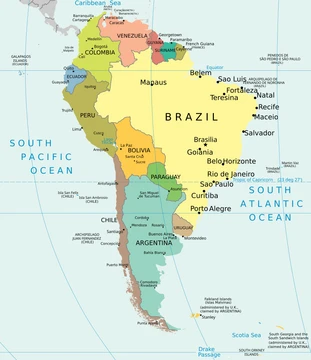
Cuiabá is the capital and largest city of the Brazilian state of Mato Grosso, located near the geographical centre of South America. Founded in 1719 during the gold rush, it has been the state capital since 1818 and is a trading centre for an extensive cattle-raising and agricultural area. The city is known as the 'Southern gate to the Amazon' and was one of the host cities for the 2014 FIFA World Cup.
- Founded
- 1719
- State Capital Since
- 1818
- Country
- Brazil
- Region
- Mato Grosso
- Known For
- Gold rush origin, agricultural hub, 2014 FIFA World Cup host
- Climate
- Tropical savanna (Aw), hot and humid
Lore & Background
The first Portuguese explorers to Cuiabá were bandeirantes from São Paulo. Manoel de Campos Bicudo visited the region in 1673 and 1682, founding the first village, São Gonçalo Beira-Rio. Pascoal Moreira Cabral arrived in 1718, found gold, and enslaved indigenous people for mining. A gold rush followed, and Cuiabá was officially founded on January 1, 1727 by Rodrigo César de Menezes, then captain of São Paulo. The town was destroyed by an earthquake in 1746. Dom Antônio Rolim de Moura Tavares served as governor from 1751 to 1765 and founded Vila Bela da Santíssima Trindade as the new capital.
Cuiabá was elevated to township status in 1818 and became the capital of the Province of Mato Grosso in 1835, replacing Vila Bela. From the late 18th century until the Paraguayan War (1864–1870), the town declined. The war brought infrastructure and economic boom, but afterward it was forgotten and used as a site of exile for troublesome politicians. Isolation preserved old Brazilian ways of life into the 20th century.
Starting in 1930, roads and aviation reduced isolation. The city grew rapidly from 1960 onward after Brasília was built. In the 1970s and 1980s, agricultural commercialization drove growth, and the population rose from 50,000 in 1960 to over a quarter million by 1980. Since 1990, growth has slowed as other towns attracted more immigration. Tourism emerged as a source of income. In 2023, Cuiabá was considered one of the ten best cities in Brazil to live in, according to a UN study.
Reader's Guide
Cuiabá's significance lies in its role as a historical gateway for Portuguese expansion into western Brazil, its foundation during the gold rush, and its enduring status as the political and economic center of Mato Grosso. The city's growth, particularly from the 1960s onward, reflects the broader development of Brazil's agricultural frontier, driven by soybeans and rice. Its location near the geographical centre of South America and at the transition zone of the Amazon, Cerrado, and Pantanal ecosystems makes it ecologically important. The city's cultural richness, blending European, African, and Native American influences, is evident in its museums, cuisine, dance, music, and craftwork. As a host city for the 2014 FIFA World Cup, Cuiabá gained international visibility. Its legacy includes being a hub for cattle-raising and agribusiness, despite economic recessions, and its recognition in 2023 as one of Brazil's best cities to live in. The city's isolation until the mid-20th century preserved traditional Brazilian ways of life, contributing to its unique cultural identity.
Did You Know?
- The city's name comes from an indigenous Bororo word meaning 'arrow-fishing'.
- An obelisk in central Cuiabá marks the exact center of the South American continent, as calculated in 1909.
- Cuiabá was one of the host cities for the 2014 FIFA World Cup.
- The city sits in a transition zone between the Amazon, Cerrado, and Pantanal ecosystems.
More in South American Cities 1-24
Elsewhere in the South American Cities universe
Spotted an error? Know more?
This is a living reference — every entry is fact-audited, and reader corrections feed straight into our audit queue. Suggest an edit · See this site's audit record