Aracaju
Capital of Sergipe, northeastern Brazil, with a tropical savanna climate.

Wikipedia / Wikimedia Commons
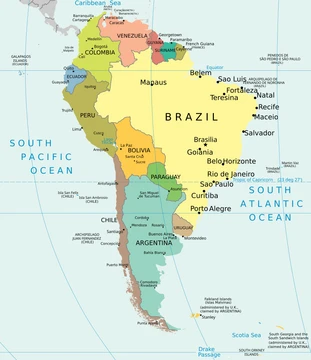
Aracaju (pronounced ARR-ə-kə-ZHOO) is the capital of the northeastern Brazilian state of Sergipe, located roughly 350 kilometers north of Salvador. As of a 2020 estimate, its population stood at 664,908—about one-third of the state’s total. The metropolitan area includes the municipalities of Barra dos Coqueiros, Nossa Senhora do Socorro, and São Cristóvão, as part of the official Metropolitan Region of Aracaju. The city’s Metropolitan Cathedral, Nossa Senhora da Conceição, serves as the seat of the Roman Catholic Archdiocese of Aracaju.
The land that became Aracaju was part of a sesmaria granted by the Portuguese crown to Pero Gonçalves around 1602, encompassing 160 kilometers of coastline dotted with small fishing villages. By 1699, a settlement called Santo Antônio de Aracaju had been recorded at the mouth of the Sergipe River, traditionally attributed to settlers and fishermen rather than the less documented figure João Mulato. It grew little during the 1700s and remained part of the parish of Nossa Senhora do Perpétuo Socorro do Tomar do Cotinguiba. The former capital, São Cristóvão, proved problematic due to its inland location; its small river port could only accommodate small boats, preventing large ships from landing in Sergipe. In the 1850s, government officials began searching for a site for a new capital, focusing on the beach near the Sergipe River’s mouth. The state government moved the customs house and Provincial Revenue Bureau there, built a post office and police substation, and constructed a port called Porto de Aracaju (the new port). The capital was officially transferred from São Cristóvão to Aracaju on March 17, 1855.
The economy rests on services and industry. In 2013, the city’s GDP was R$13,918,124. Recent years have seen major investors from Eastern Europe—especially Belarus and Russia—and China, positioning Aracaju as a key city in BRICS relations and as a “Mercocity” (a term derived from Mercosur).
Aracaju has become a popular low-cost tourism destination, recognized as one of the safest capitals in the Northeast (with 63 murders per 100,000, ranking 12th globally by murder rate) and offering the country’s lowest cost of living. It has focused on developing quality accommodations, including world-renowned hostels. Planned public transportation improvements aim to increase comfort and integrati
- Country
- Brazil
- State
- Sergipe
- Population (2020 estimate)
- 664,908
- Founded as capital
- March 17, 1855
- Climate
- Tropical savanna
- GDP (2013)
- R$13,918,124
- Airport
- Santa Maria Airport
Lore & Background
The land of present-day Aracaju was located in a sesmaria given to Pero Gonçalves by the Portuguese crown around 1602. A village called Santo Antônio de Aracaju was recorded in 1699, traditionally founded by settlers and fishermen rather than the less documented figure João Mulato. The settlement saw little growth in the 18th century. The capital of São Cristóvão presented difficulties due to its inland location and small port, so government officials began searching for land for a new capital in the 1850s. The state government transferred customs and the Provincial Revenue Bureau to the beach near the mouth of the Sergipe River, and built a port called Porto de Aracaju (the new port). The capital was moved from São Cristóvão to Aracaju on March 17, 1855.
Reader's Guide
Aracaju's significance lies in its role as the capital of Sergipe and its emergence as a low-cost tourism destination. The city's economy is based on services and industry, and it has attracted investors from eastern Europe and China, positioning itself as a key city in BRICS relations and as a 'Mercocity' adopted from Mercosur. Aracaju is recognized as one of the safest capitals in the Northeast region, with a murder rate of 63 per 100,000. The city hosted teams from seven countries at the 2016 Summer Olympics, including football athletes from Japan and gymnasts and swimmers from eastern European countries. For the 2016 Summer Paralympics, it accommodated athletes from Eurasian Economic Community countries such as Kazakhstan and Belarus, including paralympic swimmer champion Ihar Boki. The city is served by Santa Maria Airport and is located on BR-101, a major north–south highway. Its geographical area is antipodal with the Mariana Trench.
Did You Know?
- Aracaju's antipode lies in the Pacific Ocean east of the Philippines, near the island of Palau, not specifically near the Mariana Trench.
Frequently Asked Questions
What is Aracaju?
Aracaju is the capital city of the Brazilian state of Sergipe, located in the country's northeastern region. It serves as both the political and cultural center of the state.
Where is Aracaju located geographically?
The city sits roughly 350 kilometers north of Salvador, along the coast of Sergipe in northeastern Brazil. Its metropolitan area extends to neighboring municipalities including Nossa Senhora do Socorro and São Cristóvão.
How many people live in Aracaju?
A 2020 estimate puts the city's population at approximately 664,908 residents. That figure represents about one-third of Sergipe's total population.
What is Aracaju's climate like?
The city experiences a tropical savanna climate, characterized by a pronounced wet season and a dry season. This pattern is typical of Brazil's northeastern coastal areas.
When did Aracaju become the capital of Sergipe?
Aracaju was officially established as the state capital on March 17, 1855. Its Metropolitan Cathedral, Nossa Senhora da Conceição, now serves as the seat of the local Roman Catholic Archdiocese.
More in South American Cities 1-24
Elsewhere in the South American Cities universe
Spotted an error? Know more?
This is a living reference — every entry is fact-audited, and reader corrections feed straight into our audit queue. Suggest an edit · See this site's audit record