Campo Grande
Capital of Mato Grosso do Sul, planned city with diverse culture.

Wikipedia / Wikimedia Commons
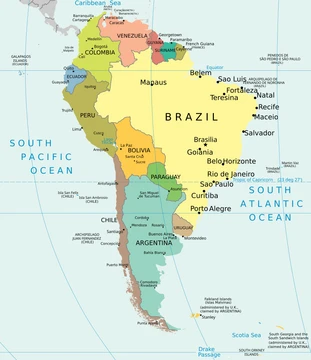
Campo Grande is a city in the central-western region of Brazil, the capital and largest city of the state of Mato Grosso do Sul. Founded in 1877 as a small village by farmers from Minas Gerais, it grew rapidly due to its climate and location, becoming a planned city with wide streets and tree-lined avenues. Historically a stronghold of separatists, it became the state capital in 1977 after Mato Grosso was split, and is notable for surpassing the former capital Cuiabá in population.
- Founded
- 1877
- Country
- Brazil
- State
- Mato Grosso do Sul
- Population (2007)
- 750,000
- Population (1970)
- 140,000
- Climate
- Tropical savanna (Köppen: Aw)
- GDP (2013)
- R$ 20.7 billion
Lore & Background
Campo Grande was founded in 1877 by farmers José Antônio Pereira and Manoel Vieira de Sousa, who arrived from Minas Gerais after the Paraguayan War. They established the village of Santo Antônio de Campo Grande near the Serra de Maracaju cliffs, at the confluence of the Prosa and Segredo streams. The first church was built later that year, and the first street, Rua Velha (now Rua 26 de Agosto), ended at a square honoring later immigrants. In 1930, the city was the site of a conflict between government forces led by Getulio Vargas and indigenous groups, who seized parts of the city until reinforcements arrived.
Reader's Guide
Campo Grande's significance lies in its role as the capital and economic hub of Mato Grosso do Sul, a state created in 1977. Its growth from 140,000 residents in 1970 to 750,000 in 2007 reflects its importance as the third-largest urban center in Brazil's Center-West region. The city's economy is dominated by the tertiary sector, with agribusiness—especially bovine livestock, soy, rice, and manioc—playing a key role. Its location at the intersection of three federal highways (BR-262, BR-163, BR-060) and a railway linking Bauru to Corumbá and Bolivia has made it a transport and export node. Culturally, it blends influences from Japanese (Okinawan), Middle Eastern, Armenian, Portuguese, German, Italian, Spanish, Paraguayan, and other immigrant groups, alongside native Amerindian and Afro-Brazilian populations. The city hosts the Campo Grande Film Festival and Festas Juninas, and is home to several universities, including the Federal University of Mato Grosso do Sul.
Did You Know?
- Campo Grande was founded in 1877 by farmers José Antônio Pereira and Manoel Vieira de Sousa after the Paraguayan War.
- The city's first street, Rua Velha (Old Street), is now called Rua 26 de Agosto.
- Campo Grande became the capital of Mato Grosso do Sul in 1977 when the state of Mato Grosso was split.
- The city has a tropical savanna climate with a dry winter season from June through September.
More in South American Cities 1-24
Elsewhere in the South American Cities universe
Spotted an error? Know more?
This is a living reference — every entry is fact-audited, and reader corrections feed straight into our audit queue. Suggest an edit · See this site's audit record