Campinas
Brazilian city reborn after a devastating yellow fever epidemic.

Wikipedia / Wikimedia Commons
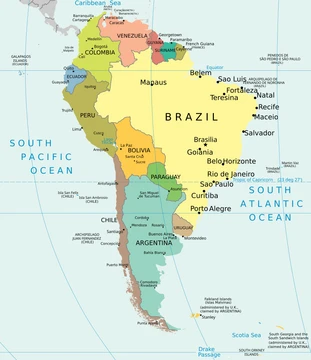
Campinas (pronounced kam-PEE-nəs) sits 84 kilometers northwest of São Paulo city in the state of São Paulo, Brazil. As of 2024, its estimated population is 1,185,977, ranking it the fourteenth most populous city in Brazil and third in its state. Its metropolitan area includes twenty municipalities, home to a combined 3,491,150 people.
The name *Campinas* means "meadows" or "grasslands" in Portuguese, referencing the original landscape: dense subtropical forests along rivers, broken by low-lying vegetation on gentle hills. The city’s crest and flag feature a phoenix, symbolizing its rebirth after a devastating yellow fever epidemic in the 1800s that killed over a quarter of its residents.
Founded on July 14, 1774, by Barreto Leme, Campinas began as a simple outpost for *bandeirantes*—explorers searching for precious minerals and Indigenous slaves—on the route to Minas Gerais and Goiás. In the early 1800s, it grew into a population center with coffee, cotton, and sugarcane farms. A railway linking São Paulo to the port of Santos, completed in 1867, spurred further growth. After slavery was abolished, foreign immigrants, mainly from Italy, replaced the lost labor force. Coffee became a major export, bringing wealth. By the early 1900s, the city boasted an opera house, theaters, banks, movie theaters, radio stations, a philharmonic orchestra, two newspapers (*Correio Popular* and *Diário do Povo*), a strong public education system (including the Escola Normal de Campinas and Colégio Culto à Ciência), and hospitals like Santa Casa de Misericórdia and Casa de Saúde de Campinas. Emperor Pedro II founded the Instituto Agronômico de Campinas, a research center for agricultural sciences. The 1938 construction of the Anhanguera Highway—Brazil’s first highway—connected Campinas to São Paulo and integrated it into the state.
Campinas was the birthplace of opera composer Carlos Gomes (1836–1896) and President Campos Salles (1841–1913). For 49 years, it was home to Hércules Florence, credited as an early inventor of photography, photocopying, and the mimeograph.
The municipality covers 795.697 square kilometers, with 238.323 square kilometers of urban area. It lies at 22°54′21″S, 47°03′39″W, about 96 kilometers northwest of São Paulo. Neighboring cities include Paulínia, Jaguariúna, and Pedreira to the north; Morungaba, Itatiba, and Valinhos to the east; Itupeva, Indai
- Founded
- July 14, 1774
- Population (2024 estimate)
- 1,185,977
- State
- São Paulo
- Country
- Brazil
- Area
- 795.697 square kilometers
- Known for
- Coffee economy, birthplace of composer Carlos Gomes and President Campos Salles, early photography inventor Hércules Florence
Lore & Background
Campinas was founded on July 14, 1774, by Barreto Leme as a simple outpost for Bandeirantes seeking precious minerals and Indian slaves. In the first half of the 19th century, it grew into a population center with coffee, cotton, and sugarcane farms. The construction of a railway linking São Paulo to Santos' seaport in 1867 spurred growth, and after the abolition of slavery, foreign immigrants, mainly from Italy, arrived to replace lost manpower. Coffee became a major export, bringing wealth and leading to the establishment of an opera house, theaters, banks, movie theaters, radio stations, a philharmonic orchestra, two newspapers, public education institutions, hospitals, and the Instituto Agronômico de Campinas, an agricultural research center founded by Emperor Pedro II. The Anhanguera Highway, built in 1938, was the first Brazilian highway and integrated Campinas into the rest of the state.
Reader's Guide
Campinas holds significance as a major urban and economic center in São Paulo state, historically driven by coffee exports and later by industrialization. Its development was shaped by immigration, railway construction, and highway building. The city is notable for being the birthplace of opera composer Carlos Gomes and President Campos Salles, and for hosting Hércules Florence, an early inventor of photography. Its official crest and flag feature a phoenix, symbolizing the city's recovery after a yellow fever epidemic in the 1800s that killed over 25% of its inhabitants. Ecologically, Campinas has less than 5% of its original vegetation cover and houses the Mata de Santa Genebra, the second-largest urban forest in Brazil. The city's climate is tropical savanna, with a history of frost and occasional strong winds.
Did You Know?
- Campinas' official crest and flag feature a phoenix because the city was practically reborn after a yellow fever epidemic in the 1800s that killed more than 25% of its inhabitants.
- The city was the birthplace of opera composer Carlos Gomes (1836–1896) and President of the Republic Campos Salles (1841–1913).
- Campinas was home for 49 years to Hércules Florence, reputed as one of the early inventors of photography, photocopying, and the mimeograph.
- The Anhanguera Highway, built in 1938 between Campinas and São Paulo, was the first Brazilian highway.
Frequently Asked Questions
What is Campinas and where is it located?
Campinas is a Brazilian city in the state of São Paulo, sitting roughly 84 km northwest of the state capital. It was officially established on July 14, 1774, and today spreads across about 796 square kilometers of gently rolling terrain.
How large is Campinas in terms of population?
With an estimated 1.19 million residents as of 2024, it ranks as Brazil's fourteenth-largest city and the third most populous within São Paulo state. Its broader metropolitan region spans twenty municipalities and houses nearly 3.5 million people in total.
What is Campinas historically known for?
The city played a central role in Brazil's coffee economy and is the birthplace of composer Carlos Gomes, President Campos Salles, and early photography pioneer Hércules Florence. It is also remembered for surviving a devastating yellow fever epidemic that reshaped its urban development.
What does the name 'Campinas' actually mean?
The Portuguese word translates to 'meadows' or 'grasslands,' a nod to the rolling, gently hilly terrain dotted with low vegetation that once stretched between riverine subtropical forests. This open landscape still defines the region's character today.
Why does Campinas's flag and crest feature a phoenix?
The bird symbolizes the city's dramatic recovery following a catastrophic yellow fever outbreak that devastated its population and infrastructure. It represents the idea of rising again from near-total loss, a narrative the local community still celebrates as part of its identity.
More in South American Cities 1-24
Elsewhere in the South American Cities universe
Spotted an error? Know more?
This is a living reference — every entry is fact-audited, and reader corrections feed straight into our audit queue. Suggest an edit · See this site's audit record