Cochabamba
Bolivian city known for its eternal spring and Water War.

Wikipedia / Wikimedia Commons
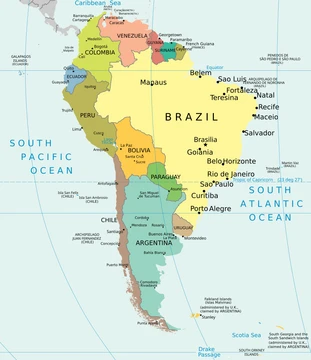
Cochabamba is a city and municipality in central Bolivia, located in a valley of the Andes mountain range. It is the capital of the Cochabamba Department and the fourth largest city in Bolivia, with a population of 661,484 according to the 2024 Bolivian census. Known as the 'City of Eternal Spring' or 'The Garden City' for its mild year-round temperatures, it has been a populated settlement since the Pre-Inca period and is an important cultural, educational, political, and commercial centre.
- population_2024
- 661,484
- founded
- January 1571 (as Villa de Oropesa)
- department
- Cochabamba Department
- country
- Bolivia
- known_for
- Water War of 2000, eternal spring climate, agricultural centre
Lore & Background
The valley of Cochabamba has been inhabited for thousands of years due to its fertile soils and mild climate. Under the Inca Empire, the area was conquered by Topa Inca Yupanqui, and his son Huayna Capac turned it into a large production enclave, importing 14,000 mitimas to work the land, primarily growing maize. The first Spanish inhabitant was Garci Ruiz de Orellana in 1542, who purchased land from local chiefs. The city was founded in January 1571 by order of Viceroy Francisco de Toledo as Villa de Oropesa, serving as an agricultural centre for mining towns like Potosí.
Reader's Guide
Cochabamba's significance extends from its pre-Columbian roots as an Inca agricultural hub to its role in Spanish colonial economy, supplying food and wood to Potosí. In the 18th century, it declined as mining waned, but it regained importance as an agricultural centre in the late 19th century. The city gained global attention during the 2000 Water War, when protests against water privatization by Aguas del Tunari (backed by Bechtel) led to the contract's termination and the return of water services to public control. This event influenced international anti-globalization movements and the UN's 2010 recognition of water sanitation as a human right. The Water War also helped spark later protests that led to the removal of two presidents and the rise of President Evo Morales in 2006.
Did You Know?
- The name Cochabamba comes from Quechua qucha 'lake' and pampa 'open plain', referring to the many lakes that once dotted the area.
- In 1812, thousands of women took up arms against the Spanish Army; Bolivia now marks May 27 as Mother's Day to celebrate their bravery.
- The 1793 census recorded 22,305 persons, including 12,980 mestizos, 6,368 Spaniards, 1,182 indigenous natives, 1,600 mulattos, and 175 African slaves.
- During the 2000 Water War, an unofficial referendum showed 96% of 50,000 people wanted Aguas del Tunari's contract terminated.
More in South American Cities 1-24
Elsewhere in the South American Cities universe
Spotted an error? Know more?
This is a living reference — every entry is fact-audited, and reader corrections feed straight into our audit queue. Suggest an edit · See this site's audit record