Córdoba, Argentina
Second-most populous city in Argentina, founded in 1573.
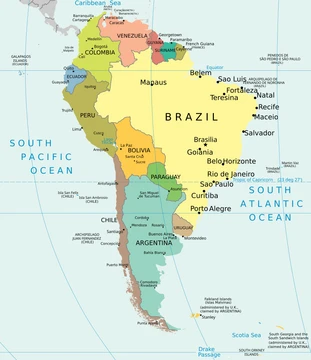
Córdoba sits in central Argentina, at the base of the Sierras Chicas along the Suquía River, roughly 700 kilometers northwest of Buenos Aires. As the capital of Córdoba Province, it ranks as the country’s second-most populous city, home to about 1.6 million people in its urban area as of 2020. Spanish conquistador Jerónimo Luis de Cabrera founded the settlement on July 6, 1573, naming it after Córdoba in Spain, and it became one of the region’s early colonial capitals (though Santiago del Estero, founded in 1553, is older). The city earned the nickname *La Docta* (“the learned”) thanks to the National University of Córdoba, established in 1613 by the Jesuit Order—the oldest university in Argentina. Its colonial past is visible in many preserved Catholic Church structures, notably the Jesuit Block (*Manzana Jesuítica*), a group of 17th-century buildings that UNESCO declared a World Heritage Site in 2000. This block includes the Colegio Nacional de Monserrat and the original university campus, now a historical museum; the university itself has been the nation’s second largest since the early 1900s, trailing only the University of Buenos Aires in students, faculty, and programs. Córdoba also played key roles in the 1918 University Revolution (*La Reforma del '18*) and the Cordobazo protests of May 1969.
The area was originally home to the Comechingones people, who lived in communities called *ayllus*. In 1570, Viceroy Francisco de Toledo of Peru tasked Jerónimo Luis de Cabrera with founding a settlement in the Punilla Valley. Cabrera led an expedition of about a hundred men, with a main column entering through the north near Villa María. They arrived at the future site of Córdoba on June 24, 1573. Cabrera named the nearby river San Juan (now the Suquía). The official founding occurred on July 6, with the settlement called Córdoba de la Nueva Andalucía, likely honoring ancestors of Cabrera’s wife from Córdoba, Spain. On the advice of Francisco de Torres, the city was built on the river’s left bank. After four years of repelling indigenous attacks, authorities moved the settlement to the opposite bank in 1577. Lieutenant Governor Lorenzo Suárez de Figueroa then laid out a grid of 70 blocks. Once relocated, the population stabilized, and the economy grew through trade with northern cities.
The Jesuits arrived in 1599, establishing a novitiate in 1608 and the Col
- Founded
- 6 July 1573
- Founder
- Jerónimo Luis de Cabrera
- Country
- Argentina
- Population (2020 census)
- about 1.6 million urban inhabitants
- Nickname
- La Docta (the learned)
- Notable institution
- National University of Córdoba (founded 1613)
- UNESCO World Heritage Site
- Jesuit Block (declared 2000)
Lore & Background
Córdoba was founded as a settlement on 6 July 1573 by Spanish conquistador Jerónimo Luis de Cabrera, who named it after the Spanish city of Córdoba. The area was inhabited by aboriginal people called Comechingones, who lived in communities called ayllus. After four years, the settlement's authorities moved it to the opposite bank of the Suquía River in 1577. The Lieutenant Governor at the time, Don Lorenzo Suárez de Figueroa, planned the first layout of the city as a grid of 70 blocks. The city's economy blossomed due to trade with the cities in the north.
Reader's Guide
Córdoba holds significance as a major colonial and modern urban center in Argentina. It was one of the early Spanish colonial capitals and is home to the National University of Córdoba, the oldest university in the country, founded in 1613 by the Jesuit Order. The city's Jesuit Block, a group of 17th-century buildings including the Colegio Nacional de Monserrat and the colonial university campus, was declared a World Heritage Site by UNESCO in 2000. Córdoba was also the epicenter of the University Reform of 1918, a movement that spread to other universities in the Americas and Spain, and the site of the Cordobazo of May 1969, a historical protest movement. Its industrial development, including the Military Aircraft Manufacturer (FMA) inaugurated in 1927, contributed to its growth into the second-largest city in Argentina by 1970.
Did You Know?
- Córdoba was founded on 6 July 1573 by Spanish conquistador Jerónimo Luis de Cabrera.
- The National University of Córdoba, founded in 1613, is the oldest university in Argentina.
- The Jesuit Block in Córdoba was declared a UNESCO World Heritage Site in 2000.
- Córdoba was the epicenter of the University Reform of 1918, known as La Reforma del '18.
More in South American Cities 1-24
Elsewhere in the South American Cities universe
Spotted an error? Know more?
This is a living reference — every entry is fact-audited, and reader corrections feed straight into our audit queue. Suggest an edit · See this site's audit record