Valparaíso
Historic Chilean port city and naval headquarters.
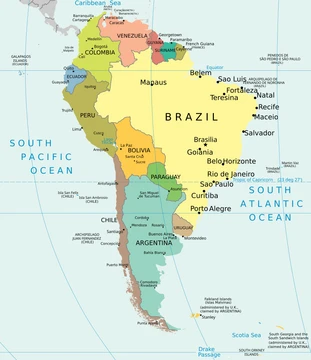
Valparaíso is a city, commune, seaport, and naval base in Chile’s Valparaíso Region. Its name comes from Valparaíso de Arriba, a town in Castile-La Mancha, Spain. With 284,938 residents, it ranks as the country’s 10th-largest commune. The Greater Valparaíso area is Chile’s second-most populous metro region, though the city itself is second in size within that metro to Viña del Mar. Located about 120 kilometers (75 miles) northwest of Santiago by road, it serves as one of the Pacific Ocean’s key seaports. It is the capital of Chile’s second-most populated administrative region, has housed the Chilean Navy headquarters since 1817, and has been the seat of the National Congress of Chile since 1990.
During the latter half of the 19th century, Valparaíso held major geopolitical importance as a frequent stop for ships crossing between the Atlantic and Pacific via the Straits of Magellan. Its golden age saw rapid growth fueled by European immigrants, earning it nicknames like “Little San Francisco” and “jewel of the Pacific” among international sailors. Key developments from that bustling era include the continent’s first volunteer fire department and the world’s oldest continuously published Spanish-language newspaper, *El Mercurio de Valparaíso*. In 2003, its historic quarter was named a UNESCO World Heritage Site.
The 20th century brought decline: many wealthy families left, and the 1914 opening of the Panama Canal sharply reduced ship traffic, damaging the port-based economy. By the 21st century, the port of San Antonio had surpassed Valparaíso in container trade volume (TEU), challenging its traditional title of Chile’s “principal port.” However, between 2000 and 2015, the city rebounded, drawing artists, tourists, and cultural entrepreneurs to its hillside historic districts. Today, thousands visit monthly from Chile and abroad to explore its maze of cobbled alleys and colorful buildings. The Port of Valparaíso remains a major hub for container traffic, copper, and fruit exports, and it increasingly attracts cruise ships during the South American summer. The city has also become a significant educational and entertainment center, hosting four large traditional universities and several vocational colleges. It is known for its artisans and bohemian culture, as well as the annual Viña Del Ma
- population
- 284,938
- metro_area_rank
- second-most populous in Chile
- location
- about 120 km northwest of Santiago
- founded_by
- Juan de Saavedra
- named_after
- Valparaíso de Arriba, Castile-La Mancha, Spain
- known_for
- major seaport, naval base, UNESCO World Heritage Site
Lore & Background
Valparaíso was originally named after Valparaíso de Arriba in Castile-La Mancha, Spain. The first European discoverers arrived in 1536 aboard the Santiaguillo, a supply ship sent by Diego de Almagro, under the command of Juan de Saavedra, who named the town after his native village. During Spanish colonial times, Valparaíso remained a small village, attacked by English pirates such as Francis Drake in 1578 and Richard Hawkins in 1594. After Chile's independence from Spain in 1818, Valparaíso became the main harbour for the nascent Chilean navy and opened international trade. The city experienced rapid growth during its golden age as a magnet for European immigrants, notably from Britain, Germany, France, Switzerland, and Italy. Notable developments include the continent’s first volunteer fire department and the world’s oldest continuously published Spanish-language newspaper.
Reader's Guide
Valparaíso's significance lies in its historical role as a crucial Pacific seaport and geopolitical hub during the 19th century, serving ships rounding South America via the Straits of Magellan and Cape Horn. It supported the California gold rush and became a magnet for European immigrants, who transformed local culture and built institutions such as Latin America's oldest stock exchange, the first volunteer fire department, and Chile's first public library. The city's historic quarter, with its labyrinth of cobbled alleys and colorful buildings, was declared a UNESCO World Heritage Site in 2003. The opening of the Panama Canal in 1914 led to economic decline, but Valparaíso has since recovered as an educational and entertainment hub, with four large traditional universities and several vocational colleges. It remains a major distribution center for container traffic, copper, and fruit exports, and receives growing attention from cruise ships. The city is also famous for the annual Viña Del Mar International Song Festival, held in a 40,000-capacity amphitheater.
Did You Know?
- Valparaíso was originally named after Valparaíso de Arriba in Castile-La Mancha, Spain.
- The city has been the Chilean Navy headquarters since 1817.
- The oldest Spanish language newspaper in continuous publication, El Mercurio de Valparaíso, is based here.
- The historic quarter of Valparaíso was declared a UNESCO World Heritage Site in 2003.
Frequently Asked Questions
Who is Valparaíso?
Valparaíso is a Pacific-coast port city and naval base in central Chile, founded by Juan de Saavedra. It takes its name from a small town in Castile-La Mancha, Spain, and currently serves as the capital of the Valparaíso Region.
What are Valparaíso's powers/role?
The city operates as one of the Pacific Ocean's principal seaports and hosts Chile's naval headquarters. Its steep hillside neighborhoods, historic funiculars, and layered architecture earned it UNESCO World Heritage designation.
Where does Valparaíso sit on the map?
It is located roughly 120 kilometers (about 75 miles) northwest of Santiago along the Chilean coast. Within its metro area it is the second-largest city behind Viña del Mar, though Greater Valparaíso remains Chile's second-most populous metropolitan region.
How does Valparaíso's story end?
As a living city, Valparaíso has no narrative finale; it currently counts around 285,000 residents and ranks as Chile's tenth-largest commune. Its ongoing function as a trade gateway, cultural hub, and regional capital keeps its story in perpetual present tense.
Why is Valparaíso important?
It anchors Chile's second-largest metro area and acts as a critical Pacific trade corridor. The combination of its naval heritage, UNESCO-recognized historic core, and status as a regional administrative capital makes it a defining piece of Chilean identity.
More in South American Cities 1-24
Spotted an error? Know more?
This is a living reference — every entry is fact-audited, and reader corrections feed straight into our audit queue. Suggest an edit · See this site's audit record