Trujillo, Peru
City in northwestern Peru, capital of La Libertad.
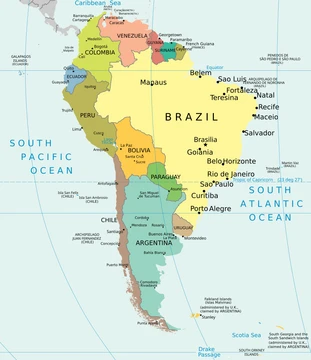
Trujillo is a city in coastal northwestern Peru, capital of the Department of La Libertad. It is the third most populous city and center of the third most populous metropolitan area of Peru, located on the banks of the Moche River near the Pacific Ocean. The site was a center of the prehistoric Moche and Chimu cultures before the Inca conquest.
- Known for
- Cradle of liberty; Capital of Culture; City of Everlasting Spring
Lore & Background
Trujillo was the site of the great prehistoric Moche and Chimu cultures before the Inca conquest. The Moche civilization flourished from about AD 100 to 800, known for elaborate ceramics, gold work, and monumental huacas. The Chimu Empire, with its capital at Chan Chan (the largest adobe city in the ancient world), was conquered by the Inca around 1470. The Spanish founded the present city in an ancestral territory populated by ancient indigenous civilizations.
The Independence of Trujillo from Spain was proclaimed on December 29, 1820. On February 9, 1822, the Congress of the Republic of Peru honored the city with the title 'Meritorious City and Faithful to the Fatherland' for its role in the fight for independence. In 1824, Bolívar declared Trujillo the provisional capital of Peru to facilitate the independence campaign. The city was the scene of a military revolt in 1932.
Trujillo is considered the 'Capital of Culture of Peru' due to prominent writers such as Cesar Vallejo, and for cultural expressions including the marinera dance, Peruvian paso horses, and caballitos de totora. The city hosts the National Marinera Festival, the Trujillo Spring Festival, and the International Book Festival.
Reader's Guide
Trujillo holds significance as a historical and cultural center of northern Peru. Its pre-Columbian heritage includes the Moche and Chimu civilizations, with major archaeological sites such as Chan Chan (a UNESCO World Heritage Site) and the Temples of the Sun and Moon. The city played a key role in Peruvian independence, being the first to proclaim independence from Spain in 1820 and later serving as provisional capital under Bolívar. It is recognized as the birthplace of Peru's judiciary. Culturally, Trujillo is known as the 'Capital of the Marinera' and the 'Cradle of the Peruvian Paso horse,' and it hosts major festivals. The city center features colonial architecture with wrought ironwork, and the Roman Catholic Archdiocese of Trujillo is based there. Since 2011, Trujillo has participated in the 'Emerging and Sustainable Cities' pilot project with the Inter-American Development Bank, and in 2012 IBM selected it for a 'Smarter Cities Challenge' to improve public safety and transportation.
Did You Know?
- Chan Chan, near Trujillo, is the largest adobe city in the ancient world and a UNESCO World Heritage Site.
- The city's coat of arms was awarded by King Charles V of Spain on December 7, 1537.
- Trujillo was declared the provisional capital of Peru by Bolívar in 1824.
Frequently Asked Questions
Who is Trujillo, Peru?
Trujillo is the third-largest city in Peru and serves as the capital of the La Libertad department on the country's northwestern coast. It sits along the Moche River, just inland from the Pacific Ocean.
What are Trujillo, Peru's powers and role?
The city is widely nicknamed the 'City of Everlasting Spring' for its mild, pleasant climate year-round. It also carries the title 'Cradle of Liberty and Judiciary,' reflecting its central role in Peru's independence movement and legal history.
How does Trujillo, Peru's story end?
Rather than a single ending, Trujillo's long narrative runs from the prehistoric Moche and Chimu civilizations that flourished on the site, through Spanish colonization in 1537, to its modern identity as Peru's self-proclaimed Capital of Culture.
Why is Trujillo, Peru important?
It is the anchor of Peru's third-largest metropolitan area and a major cultural and economic hub in the north. The city was also where Peruvian independence was proclaimed on December 29, 1820, cementing its place in national memory.
Where exactly is Trujillo, Peru located?
Trujillo lies in the coastal northwestern region of Peru, on the banks of the Moche River not far from the Pacific shoreline. It is the administrative seat of the Department of La Libertad.
More in South American Cities 1-24
Spotted an error? Know more?
This is a living reference — every entry is fact-audited, and reader corrections feed straight into our audit queue. Suggest an edit · See this site's audit record